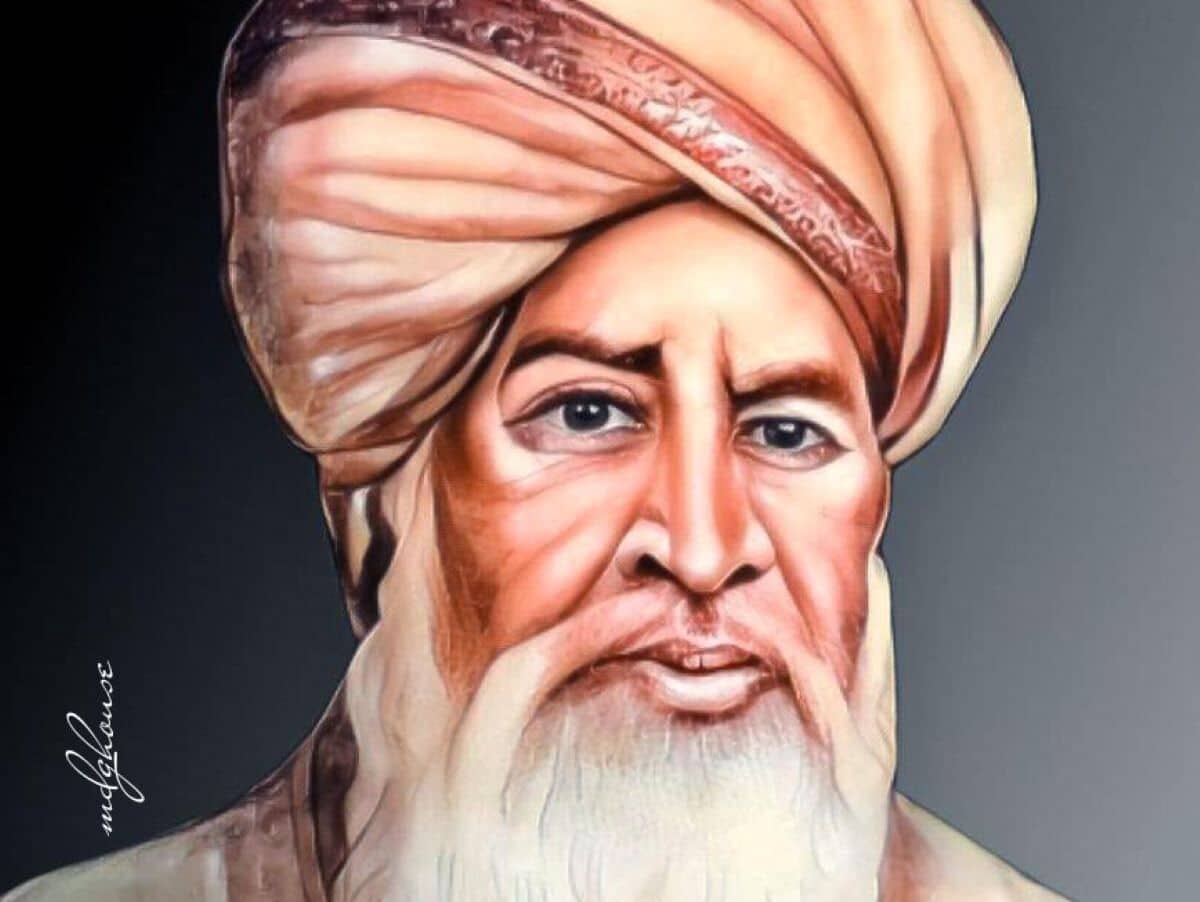
Haji Shariatullah was born in 1781, in Faridpur district in East Bengal. His father was a farmer and his family was not very well off. In 1799, he travelled to Arabia to perform Hajj and stayed there for next nineteen years. He became gratly influenced by the beliefs of Sheikh Abdul Wahab. On his return to Eastr Bengal, he started his own reform movement designed to purify Islam of the Hindu influences. Haji Shariatullah died in 1840, but his work was carried on by his son Mohsin ud Din.
Haji Shariatullah believed that the Islamic community had moved away from true Islamic practice. He wanted them to return to what he thought was the observation of Islamic duties called Faraiz. This was why his movement was called the Faraizi Movement.
Haji Shariatullah found that Muslims of east Bengal had been oppressed both by Hndus and by British. Previously the Muslims had been the ruing class in Bengal,but when the British took over , they worked with the local zameendars, who were mainly Hindus. The Muslims were given only few oppertunities in education and employement. As a result manny Muslim families had been reduced to near poverty. Haji Shariatullah started the Faraizi movemenent to restore the pride of Muslims and remove what he thought were the Hindu practices whch had crept into their worship. Emphasis was placed on praying for past sins and on promising to lead a righteous life in the future. An important part of this reform would be to follow the righteous obligations of a true Muslim. The succuess if Haji Shariatullah's reforms caused great concern amongst the Hindus of East Bengal. In that region Hindu and British landlords carried out economic oppression of the Muslim peasants. The landlords did not want Haji Shariatullah creating difficulties for them and were very alarmed that Muslims were uniting in a desire to improve their lives and purify their religion. They drove Haji Shariatullah out of the region to Nawabganj in Dhaka district, where he died in 1840.